
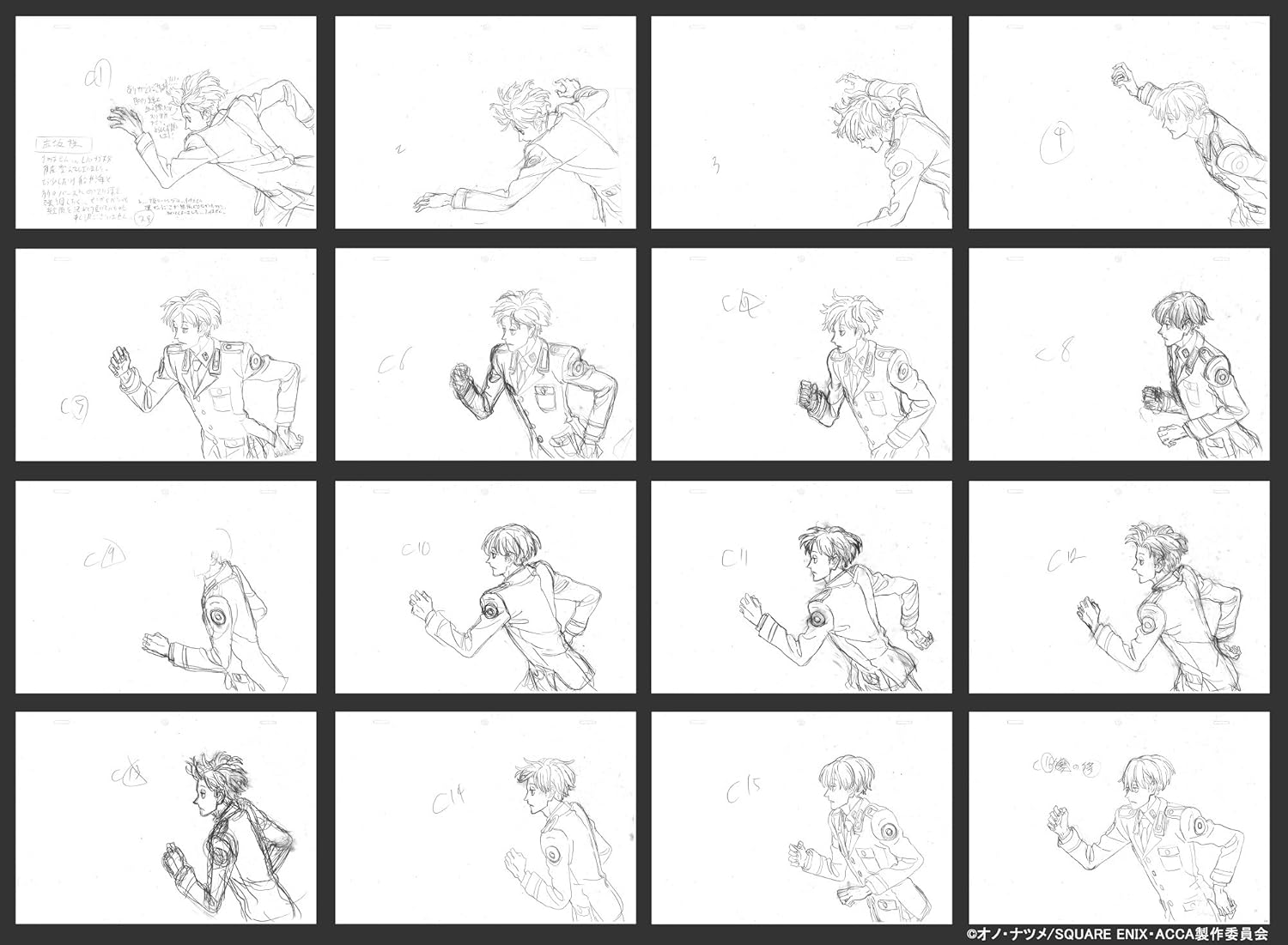
Moving from “consuming” stories to “owning” value. For the sophisticated collector, ACCA: 13-Territory Inspection Dept. represents a rare intersection of narrative depth and aesthetic permanence. In this article, we explore why the art books produced by MADHOUSE and Studio Pablo are far more than mere fan merchandise—they are intellectual assets that grow in value over time.
1. The Zenith of Craftsmanship: MADHOUSE × Studio Pablo
The visual language of ACCA is not merely a “background”; it is a silent narrator that defines the world’s history and temperature.
MADHOUSE: A Global Standard of Aesthetic
Renowned worldwide for their uncompromising quality, MADHOUSE crafted a world where every silhouette and sartorial detail feels timeless. Their calculated design ensures that even a decade later, the visuals remain as sharp and relevant as the day they were first broadcast.
Studio Pablo: The “Painterly” Touch
The true standout is the background art by Studio Pablo. In an era dominated by digital efficiency, their work evokes a tactile, painterly quality that is increasingly rare. Each of the 13 districts is rendered with its own unique architectural logic and atmospheric lighting. When compiled into a physical art book, these visuals transcend animation to become a definitive archive of landscape and architectural art.
2. Physical Media as a Scarcity-Driven Investment
Currently, the ACCA Visual Book and the Background Art Book by Studio Pablo are frequently out of stock in the Japanese market, and for good reason.
Why Do These Books Hold Their Value?
- Irreplaceable Print Quality: High-quality Japanese printing captures ink density and paper textures that digital screens simply cannot replicate.
- Geographical Scarcity: These editions were primarily released for the Japanese market. As global appreciation for “Sakuga” (the art of animation) rises, the supply of pristine physical copies dwindles, naturally driving up their value in the secondary market.
- The “Japan-Exclusive” Appeal: For international collectors, owning a physical piece of Japanese animation history is a mark of true curation. Finding a copy in good condition is increasingly viewed as a successful “investment” rather than a simple purchase.
3. The Intellectual Fulfillment of Possession
To own these books is to possess the very soul of the Dowa Kingdom. It is about the luxury of slowing down and appreciating the craftsmanship that went into every frame.
[Editor’s Note: A Moment for the Sophisticated Collector]
Imagine an evening with a glass of your favorite fine drink and the warm glow of a desk lamp. Turning these pages is not just reading; it is an immersive experience that allows you to observe the intricate details at your own pace.
For those few who manage to secure these volumes, they are not just items on a shelf—they are lifelong assets of the mind.